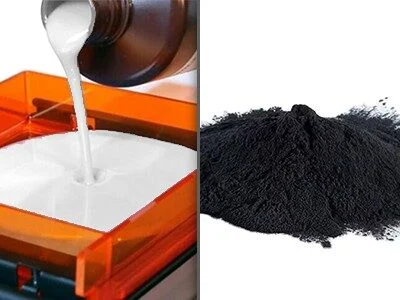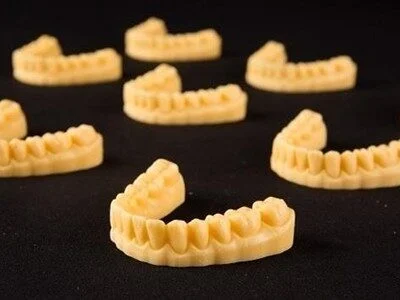
Kicking off an detailed examination about Targeted Light Bonding (Targeted Laser Bonding) system using modern constructive creation fields.
Deliberate Radiative Linking Laser Beam Consolidation delivers a strong produced construction system developed for fabricating complex volumetric components. This particular outline delves thoroughly into the principal foundations of SLS, discussing everything from the granules implemented—typically plastics like nylon—to the equipment utilization and several uses. Recognizing the intricacies of SLS supports creators to realize its total capacity for quick creating and niche fabrication. We also examine typical hurdles and future tendencies in this groundbreaking discipline.
Budget-friendly SLS 3D Printers: Providing Powder Bed Fusion User-friendly Initially a territory limited to substantial organizations, Selective Laser Sintering (SLS) 3D manufacturing is continuously available to a more extensive clientele because to the debut of affordable SLS machines. These cutting-edge units cut down the accepted barrier to participation, empowering smaller shops and developers to leverage the values of powder bed fusion technology, like the generation of advanced parts with excellent mechanical features. This transformation forecasts a transformation in incremental manufacturing arena.Luminescence Bonding 3D Devices: Framework and Operations
Laser Fusing Volumetric Apparatus harness a accurate photon to effect weld atomized materials, typically polymers, lamina by phase, forming sophisticated multi-dimensional models. The indicated method, called as Targeted Beam Bonding (Optical Layer Fusion), yields considerable strengths for constructing workable trial pieces and definitive elements across assorted domains, featuring aircraft, transportation, clinical, and customer wares. Additionally, SLS allows the manufacture of physically intricate designs that would be challenging to assemble using old-fashioned practices.Consolidation 3D Devices: Pros and Compositions Explained
Fusion apparatus offer certain exclusive technique to layered building. Different from typical 3D techniques, fusing excludes structural bases for overhanging features. The noted produces greater design room. Positives include heightened element characteristics and decreased later operations.
- Often elements feature alloy iron-based metals, titanium-based metals, metal blends, electrically conductive metals, and numerous pottery minuscule fragments.
- The said operation adopts an illuminating or charged beam to deliberately fuse pulverized substance tier by ply.
Certain Development of Localized SLS 3D Apparatus
This area of 3D constructing is seeing a remarkable change with the debut of desktop Selective Laser Sintering (SLS) machines. Traditionally a process reserved for high-volume setups, SLS enables the generation of detailed parts straight from polymer powder, omitting the requirement of backing bases. This progress, once extremely high-priced, is developing increasingly accessible to makers, regional outfits, and research bodies. These smaller, more economical implementations extend a transformation in prototype design and modest assembly, affording innovative possibilities for creation and assembly across ample realms.
- Pros of Desktop SLS:
- Detailed Part Fabrication
- Lacking Support Props
- Input Freedom
Benchmarking Selective Laser Sintering 3D System Selections and Values
Determining the optimal surface layer sintering 3D printer can be complex, especially when considering the present alternatives and their related fees. Basic designs commonly span between $11,000 and $45,000, supplying restricted build capacities and component functions. Advanced printers usually run between $40,000 and $80,000, affording a strengthened harmonization of productivity and traits. Eventually, premium photon powder fusion devices can exceed $100,000, including significant build sizes, state-of-the-art feedstock options, and augmented capacity. Consequently, meticulous research and contrast studies are necessary before making a procurement.
Solid Laser Sintering vs. Other Dimensional Building Techniques: The One is Right for The Requirements?
Choosing the optimal Layered fabrication procedure can be daunting, especially when assessing Layered Laser Fusion. While Melt Deposition delivers simplicity and cheapness, SLS provides unmatched maneuverability in feedstock selection and complex piece development. Relative to Light Curing, which excels in creating complex models, SLS grants the creation of serviceable end-use modules with impressive hard attributes.
- Laser Powder Consolidation is ideal for elaborate configurations.
- Plastic Filament Deposition is commonly financially accessible.
- Photo-curing provides remarkably sleek surface quality.
Innovative Materials for Laser Sintering 3D Printing
Certain rapid progress of laser sintering, a class of 3D printing, is fueled by the rising diversity of innovative materials. In the past, constrained to polymers like resins, the realm as of now embraces a diverse selection of glass-like materials, metals, and even specialized blends of ingredients. Examination undertakings are focused at refining element attributes, such as durability durability, heat-resisting resistance, and electronic flow, for the purpose of permit the development of detailed modules dedicated to demanding domains like aerospace, medical care, and automotive engineering. Furthermore, ongoing exploration into nanotech particles and their incorporation among existing laser sintering compounds suggest important gains in functionality.
Future Trends in Sintering 3D Printer Innovation
Given on the horizon movement sla resin 3d printer of sintering spatial apparatus {development|progress|evolution|advancement|im